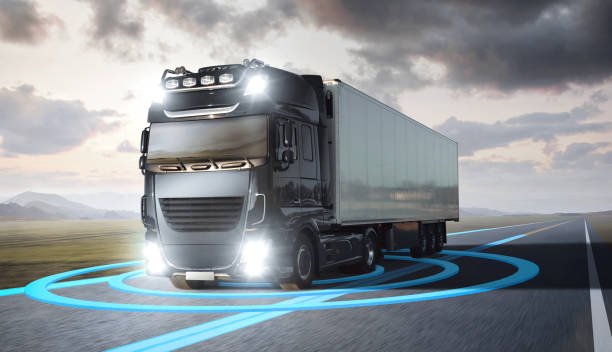
The logistics industry has always been at the forefront of innovation, constantly adapting to new technologies to improve efficiency, reduce costs, and enhance safety. Over the past decade, one of the most exciting advancements has been the development of autonomous trucks. Once considered a futuristic dream, self-driving trucks are now becoming a reality, thanks to rapid progress in artificial intelligence (AI), sensor technology, and connectivity.
In this article, we’ll explore the latest innovations in autonomous truck technology and how they are reshaping the logistics industry.
The Rise of Autonomous Trucks
Autonomous trucks are no longer just experimental projects confined to research labs. Companies like Tesla, Waymo, TuSimple, Aurora, and Embark are making significant strides toward commercial deployment. These companies are leveraging AI, machine learning, and high-precision sensors to develop trucks capable of operating with minimal human intervention.
Levels of Automation in Autonomous Trucks
To understand where the industry is headed, it’s important to recognize the different levels of automation in autonomous vehicles:
- Level 0: No automation – human drivers handle all tasks.
- Level 1: Driver assistance – basic automation like cruise control.
- Level 2: Partial automation – some automated features, but human supervision is required.
- Level 3: Conditional automation – the truck can handle most driving tasks, but human intervention may be needed in complex situations.
- Level 4: High automation – the truck can operate without human intervention in controlled environments.
- Level 5: Full automation – no human driver needed at all, regardless of location or conditions.
Most current autonomous trucks operate at Level 3 or Level 4, meaning they still require a human safety driver in some scenarios but can drive themselves in most cases.
Key Innovations in Autonomous Truck Technology
1. AI and Machine Learning for Smarter Navigation
AI-powered navigation systems are enabling trucks to analyze real-time data, predict road conditions, and make informed decisions. Deep learning algorithms help these trucks recognize obstacles, interpret traffic signals, and optimize routes based on live traffic data.
Companies like TuSimple are using AI to develop autonomous driving systems capable of driving long-haul routes efficiently, reducing fuel consumption and increasing safety.
2. LIDAR and Advanced Sensor Technology
Autonomous trucks rely on a combination of LIDAR, radar, and cameras to detect and respond to their surroundings. LIDAR (Light Detection and Ranging) creates a real-time 3D map of the environment, allowing trucks to detect vehicles, pedestrians, and road hazards with extreme precision.
Innovations in solid-state LIDAR have made these systems more reliable and cost-effective, paving the way for mass adoption.
3. Platooning Technology
Platooning is a game-changing concept that allows multiple autonomous trucks to drive in a convoy formation. The lead truck is controlled by a human driver, while the following trucks autonomously mirror its actions. This reduces drag, improves fuel efficiency by up to 10%, and enhances road safety by minimizing human errors.
Major logistics companies are already testing platooning to reduce transportation costs and increase delivery speed.
4. 5G and V2X Connectivity
High-speed 5G networks and Vehicle-to-Everything (V2X) communication are essential for autonomous trucks. These technologies allow trucks to communicate with each other, infrastructure (such as traffic lights and road sensors), and cloud-based systems in real-time.
With edge computing and ultra-low latency, trucks can process vast amounts of data instantly, enabling safer and more efficient autonomous driving.
5. Electric and Hydrogen-Powered Autonomous Trucks
Sustainability is another major focus in the logistics industry. Many companies are investing in electric and hydrogen-powered autonomous trucks to reduce carbon emissions and lower fuel costs.
Tesla’s Semi, for instance, is an electric truck designed with autonomous capabilities. Similarly, Hyundai and Nikola are working on hydrogen-powered autonomous trucks to provide an eco-friendly alternative for long-haul transportation.
6. Autonomous Freight Yards and Hubs
Another significant development is the use of autonomous trucks in freight yards and distribution hubs. Companies are deploying self-driving trucks for short-distance movements within logistics centers, where they operate in controlled environments without human drivers.
This reduces labor costs and improves operational efficiency, as trucks can move trailers 24/7 without downtime.
Benefits of Autonomous Trucks in Logistics
1. Increased Efficiency and Cost Savings
Autonomous trucks can operate 24/7 without mandatory rest breaks, significantly reducing transit times and increasing delivery speed. With optimized fuel consumption, logistics companies can save millions of dollars annually.
2. Improved Safety
Human error is responsible for 94% of truck accidents. Autonomous trucks eliminate distractions, fatigue, and reckless driving, leading to safer roads and fewer accidents.
3. Reduced Carbon Emissions
AI-driven route optimization and the adoption of electric autonomous trucks contribute to lower carbon footprints. More efficient driving patterns reduce fuel consumption and emissions.
4. Addressing the Driver Shortage
The logistics industry is facing a severe shortage of truck drivers, with an estimated 80,000 driver vacancies in the U.S. alone. Autonomous trucks can help fill this gap by taking on long-haul routes, allowing human drivers to focus on short-haul and last-mile deliveries.
Challenges and Future Outlook
Despite the rapid advancements, several challenges remain before full-scale deployment of autonomous trucks:
- Regulatory Hurdles: Governments are still developing laws and safety standards for autonomous vehicles.
- Public Trust and Acceptance: Many people remain skeptical about self-driving technology.
- Cybersecurity Risks: Autonomous trucks rely heavily on software and connectivity, making them vulnerable to hacking.
- High Initial Costs: The technology is still expensive, though costs are expected to decrease as adoption grows.